If you haven’t read the introduction post, that’s a good place to start.
In this quadrant, slow feedback meets a complicated domain. Slow here means either delayed or expensive, sometimes both: you might not know if you got it right for a long time, or the cost of finding out might be high enough that you can’t afford many attempts.
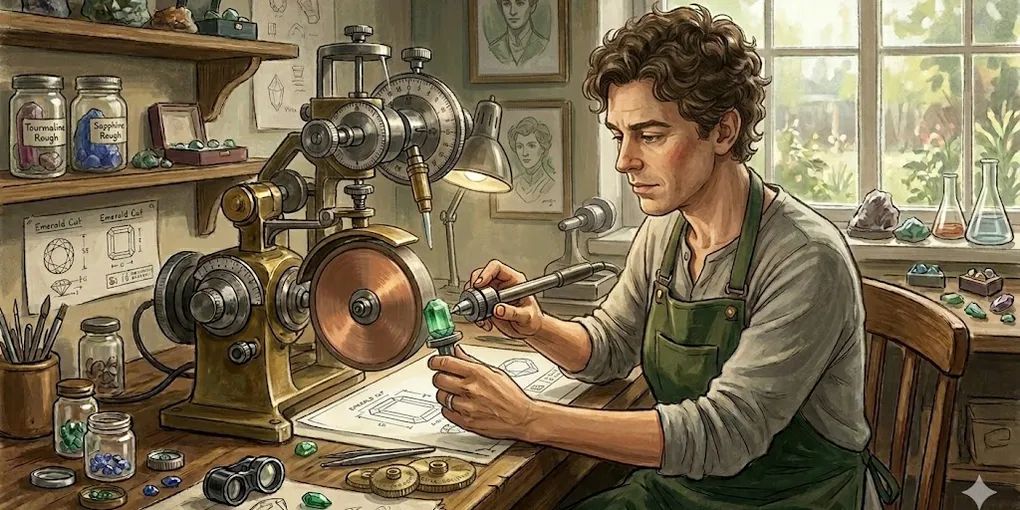
I like in this quadrant to use the example of a gemstone cutter. Different gemstones have different properties and practicing cutting on some of them can be very costly, and opportunities to practice on those expensive stones are few and far between. This means that you as a practitioner have to tackle the learning problem differently and use different ways of feedback to improve your skills.
The main problem as hinted earlier is the volume of authentic practice. This means we have to engineer our learning environment to compensate.
Two approaches worth building before you ever get a real iteration are skill mapping and finding proxies that mirror the real conditions.
Mapping the skills needed is very important, so you practice the right sub-skills before so they don’t need too much sharpening when you get the rare opportunity. For the gemstone cutter this might mean training tool control on glass, studying cleavage planes on cheaper stones, or developing his eye for reading rough material, all before an expensive stone is ever in his hand.
Mentorship and corrective feedback are very valuable in this quadrant. Seasoned pros have seen the patterns you haven’t had a chance to encounter yet. In this quadrant that matters more than usual, a seasoned cutter has made the rare cuts hundreds of times across a career, and when you sit with them you’re borrowing accumulated experience you simply can’t build at your own pace, including how things behave when conditions shift in ways you haven’t seen yet.
What is important in this learning domain is that when you do get a real iteration, treat it as precious data. This means that a detailed debrief on your experience is very useful: what was the procedure, what happened, where did the outcome match your expectations and where did it diverge? A gem cutter might make notes about the stone’s origin and grade, the approach he chose and why, where the cut went exactly as expected, where the stone surprised him. Maybe the stone responded differently under pressure than a similar specimen had before.
The point is that all of that detail fades fast in memory. You might not touch a stone like that again for a year. The written record is doing the job that repetition would otherwise do.
In fast feedback domains tacit knowledge accumulates naturally through volume. In slow domains you have to consciously construct it. The pathway to mastery for the aspirant gem cutter is creating a preserved memory of all the stones he’s ever touched and preparing himself for the rare learning opportunities that are still to come.


