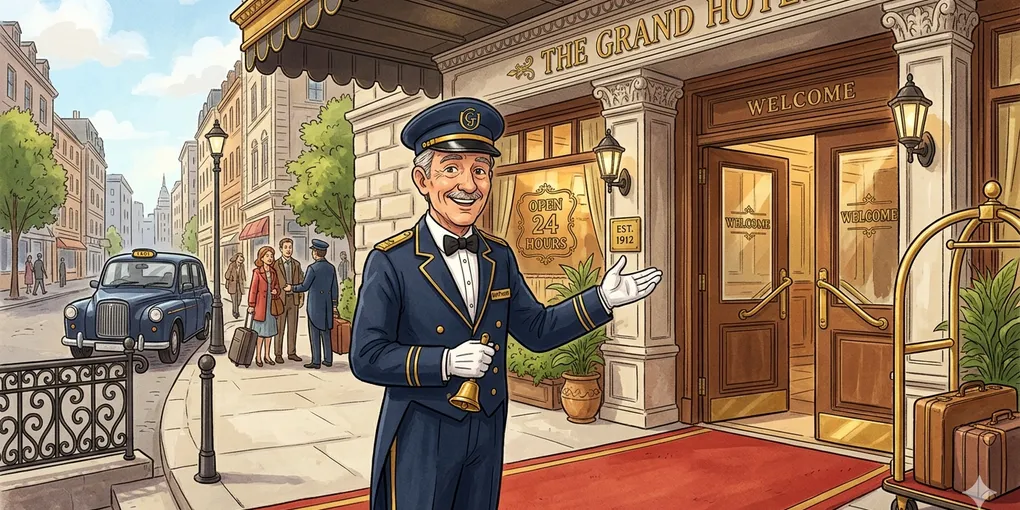
If a hotel ran the numbers on its doormen, it would be easy to conclude that the job is opening a door. A person is also a cost every month, until they eventually quit. An automatic door, in contrast, is a one-time cost with the occasional service call. It’s easy to view reality through this lens and conclude that it’s a good investment to abandon the doormen and go for automatic doors.
However, what’s often not included in the analysis is that a doorman remembers a regular’s name, stops the wrong people from entering through the door, and creates a welcoming atmosphere. This wasn’t part of the earlier cost analysis.
Rory Sutherland calls this the doorman fallacy. You define a role by its most measurable part, you optimize that part, and you quietly throw away everything you never put a number on. The savings and the losses are both true, but one gets mentioned, and one remains hidden at the time.
Once you start looking for it, you see it everywhere, and there seems to be more of it every year. The new chatbot that handles most of the support tickets, where “most” is doing a lot of quiet work, and the calls it can’t handle are usually the ones that were going to matter. The self-checkout that trims the cashier line. I do have to admit, though, that I like self-checkout. I use it nearly every time. But I do also notice the small human interactions that got lost with it.
So the question isn’t what a role obviously does, or even what gets lost when it goes. It’s what the role is quietly holding up that nobody will notice until it’s gone. A doorman holds up trust, status, and a hundred small judgments about who belongs in the lobby, and you learn the value he was providing, at least when he is gone.
Businesses love efficiency, and people love comfort, and most of the time those points in the same direction. The doorman fallacy is just the reminder that most of the time is not all of the time, and that the moments they split are exactly the ones the spreadsheet can’t see.